
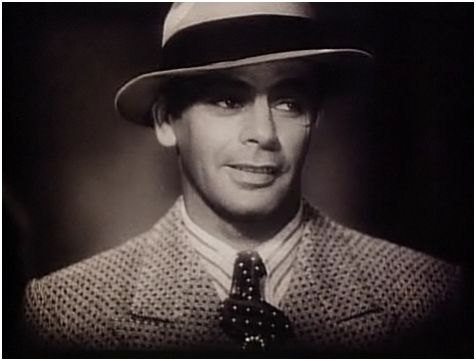
Paul Muni
Stage and film actor known for intense preparation and biographical roles.

via Wikipedia: Mervyn LeRoy · see source
during the 1930s, with the rare privilege of choosing his own parts.
- known_for
- Intense preparation for roles, biographical films, Academy Award for The Story o
Verified Timeline
Lore & Background
Muni was born to a Jewish family in Lemberg and emigrated to the United States at age seven, settling in Chicago. He learned Yiddish as his first language and began acting in the Yiddish theatre with his parents, who were both actors. As a teenager, he developed skill in makeup, enabling him to play much older characters; at age 12, he played an 80-year-old man on stage. Muni began acting on Broadway in 1926, and his first English-language role was that of an elderly Jewish man in the play We Americans.
Reader's Guide
Paul Muni's significance lies in his transformative approach to acting, marked by intense preparation and mastery of makeup.
Did You Know?
- Muni learned Yiddish as his first language and began acting in the Yiddish theatre with his parents, who were both actors.
- At age 12, he played an 80-year-old man on stage, demonstrating his early skill with makeup.
- He married Bella Finkel, an actress in the Yiddish theatre, in 1921, and they remained married until his death.
- Marlon Brando called Muni the greatest actor he ever saw.
- The New York Times described Muni's dedication to his craft as an obsession.
A Childhood Forged by Fire and Loss
Mervyn LeRoy was born on October 15, 1900, in San Francisco, the only child of Edna and Harry LeRoy, a prosperous department store owner. The family was Jewish but had lived in the Bay Area for generations, and LeRoy later described his relatives as San Franciscans first, Americans second, Jews third. His mother's devotion to vaudeville at the Orpheum and Alcazar theaters sparked his earliest theatrical exposure, earning the six-year-old a papoose part in a 1906 production of The Squaw Man. That very year, the earthquake and fire struck. LeRoy was asleep on the second floor when the house collapsed. His father's import-export store was destroyed, and the pair spent six months as displaced persons in a military tent city at the Presidio. Harry took work as a Heinz Pickle salesman but was left, in his son's recollection, a beaten man. The parents had separated in 1905, and Harry raised Mervyn alone until dying in 1916. By age twelve, LeRoy was selling newspapers on the streets, an education in raw urban life that would later inform his filmmaking.
Vaudeville's Roving Stage
At fourteen, while hawking newspapers near the Alcazar Theatre, a young LeRoy caught the eye of stage star Theodore Roberts and landed a bit part in a 1914 production of Barbara Frietchie. The audience's approval thrilled him, and he quickly moved on to lead juvenile roles in Tom Sawyer and Little Lord Fauntleroy with the Liberty Theater in Oakland. His fascination with Charlie Chaplin led him to study the comedian at local film sets and craft a burlesque imitation. In 1915 he won a competition at the Pantages Theater against nearly a thousand other Chaplin imitators, earning a slot as The Singing Newsboy in Sid Grauman's Panama-Pacific Exposition show, Chinatown by Night. When his father died in 1916, the fifteen-year-old had to earn his own living. He paired with sixteen-year-old actor-pianist Clyde Cooper, forming the act LeRoy and Cooper: Two Kids and a Piano. The duo initially struggled so badly that LeRoy joked they would have performed in toilets for money. Eventually the Pantages, Gus Sun, and Orpheum circuits picked them up for national tours, where they shared bills with luminaries like Sarah Bernhardt, Harry Houdini, and Jack Benny. After three years, a death in Cooper's family led to the act's amicable end.
Two Studios, Two Eras
During the 1930s, LeRoy established himself as one of just two masterful practitioners of lean, effective directing at Warner Brothers, the other being his colleague Michael Curtiz. His Warners catalogue includes Little Caesar (1931), I Am a Fugitive From a Chain Gang (1932), Gold Diggers of 1933 (1933), Anthony Adverse (1936), and They Won't Forget (1937), a run of films that cemented his reputation for storytelling efficiency. In 1939 he departed Warner Brothers for Metro-Goldwyn-Mayer, where he assumed the dual role of director and producer. At MGM, his most celebrated credit is as producer of The Wizard of Oz (1939), one of the most iconic films ever made. His later career saw him return to directing with Quo Vadis (1951), which earned an Oscar nomination. The film's sweeping depiction of the burning of Rome drew directly on his childhood memories of the 1906 San Francisco fire, connecting his earliest trauma to his most ambitious visual set piece. LeRoy's career thus spanned two major studios and two distinct phases: the gritty, economical Warners era and the grander, producer-driven MGM period.
The Streets as a Filmmaking Teacher
LeRoy consistently credited his pre-Hollywood years with shaping the realism he brought to cinema. Selling papers through Chinatown, the Barbary Coast, and Fisherman's Wharf, he absorbed the rhythms of every class of person in San Francisco. He recalled seeing life in raw on the streets, listing the cops, whores, reporters, bartenders, Chinese laborers, commercial fishermen, and shopkeepers he encountered daily. That immersion gave him an intuitive grasp of how ordinary people thought, loved, and hated, a foundation he carried into every script he directed. The 1906 earthquake left an equally indelible mark. LeRoy described his memory as a kaleidoscope of pictures and said he had always thought in visual terms. Decades later, when staging the burning of Rome in Quo Vadis, he admitted he used the destruction of San Francisco as his grim model. He called the earthquake the big thing in his life, noting it changed him before he even knew he had one. His mother's vaudeville obsession and the influence of cousins Jesse L. Lasky and Blanche Lasky further rooted his artistic instincts in live performance.
Gallery
Frequently Asked Questions
Who is Paul Muni?
Paul Muni was a Chicago-born American actor who rose from the Yiddish stage to become one of Warner Bros.' most celebrated leading men in the 1930s. He was granted the unusual freedom to select his own roles, a mark of his standing at the studio.
What is Paul Muni's most famous film?
His Oscar-winning portrayal of the French scientist in The Story of Louis Pasteur (1936) is widely regarded as his signature performance. It earned him the Academy Award for Best Actor and cemented his reputation for deeply researched biographical roles.
What was Paul Muni's birth name?
He was born Frederich Meshilem Meier Weisenfreund in Chicago before adopting the stage name Paul Muni. His early training came through the Yiddish theater tradition.
What made Paul Muni's acting approach distinctive?
Muni was known for an almost obsessive level of preparation, immersing himself in the lives of the historical figures he portrayed. This commitment made him a natural fit for biographical dramas throughout his career.
Did Paul Muni work on stage as well as film?
Yes—his stage career spanned decades, including a 1955 production of Inherit the Wind for which he received a Tony Award nomination for Best Actor in a Play. His theatrical roots in Yiddish theater shaped his approach to both mediums.
More in Classic Hollywood Icons 1-24
Elsewhere in the Classic Hollywood Icons universe
Spotted an error? Know more?
This is a living reference — every entry is fact-audited, and reader corrections feed straight into our audit queue. Suggest an edit · See this site's audit record